
Mergers and acquisitions are high-stakes ventures that require accurate decisions. In recent years, artificial intelligence (AI) has become an indispensable tool for executives navigating this landscape. Historically, the decision-making process of M&A was based on manual analysis, spreadsheets, and instinct.
Nowadays, AI-powered technology and machine learning algorithms are changing the process by offering more insightful information, revealing latent risks, and identifying opportunities that a human could miss.
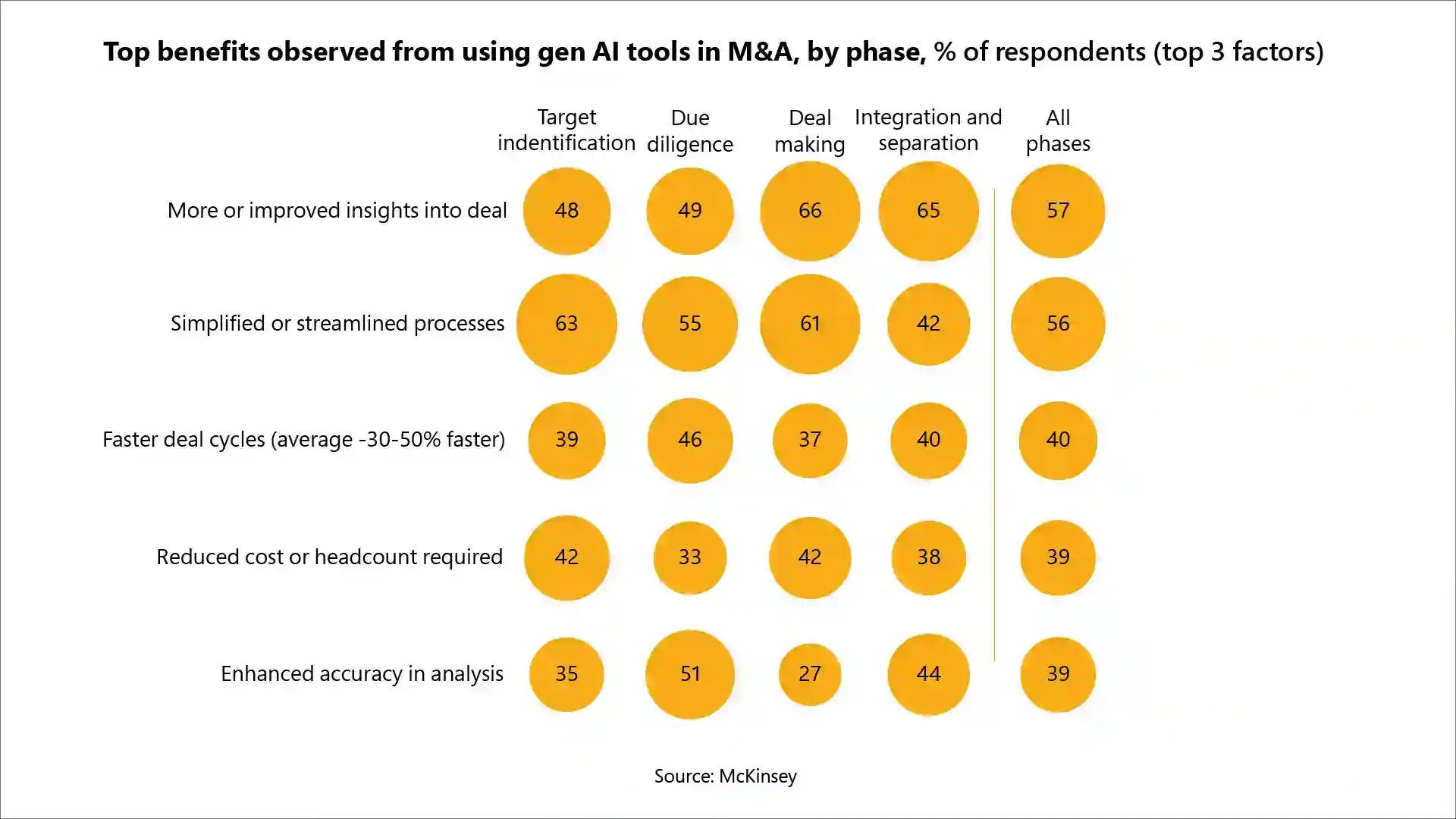
In the report Gen AI in M&A: From Theory to Practice to High Performance, released by McKinsey, organizations that apply generative AI in their M&A processes claim that this technology saves them approximately 20% in terms of costs and reduces their deal time by 30-50%, demonstrating that technology is producing tangible outcomes in 2026.
The current AI transformation is helping business executives make wiser decisions, minimize operational friction, and maximize the deal value. Let us discuss the use of AI in mergers and acquisitions in detail in this blog.
How Can AI Improve Due Diligence?
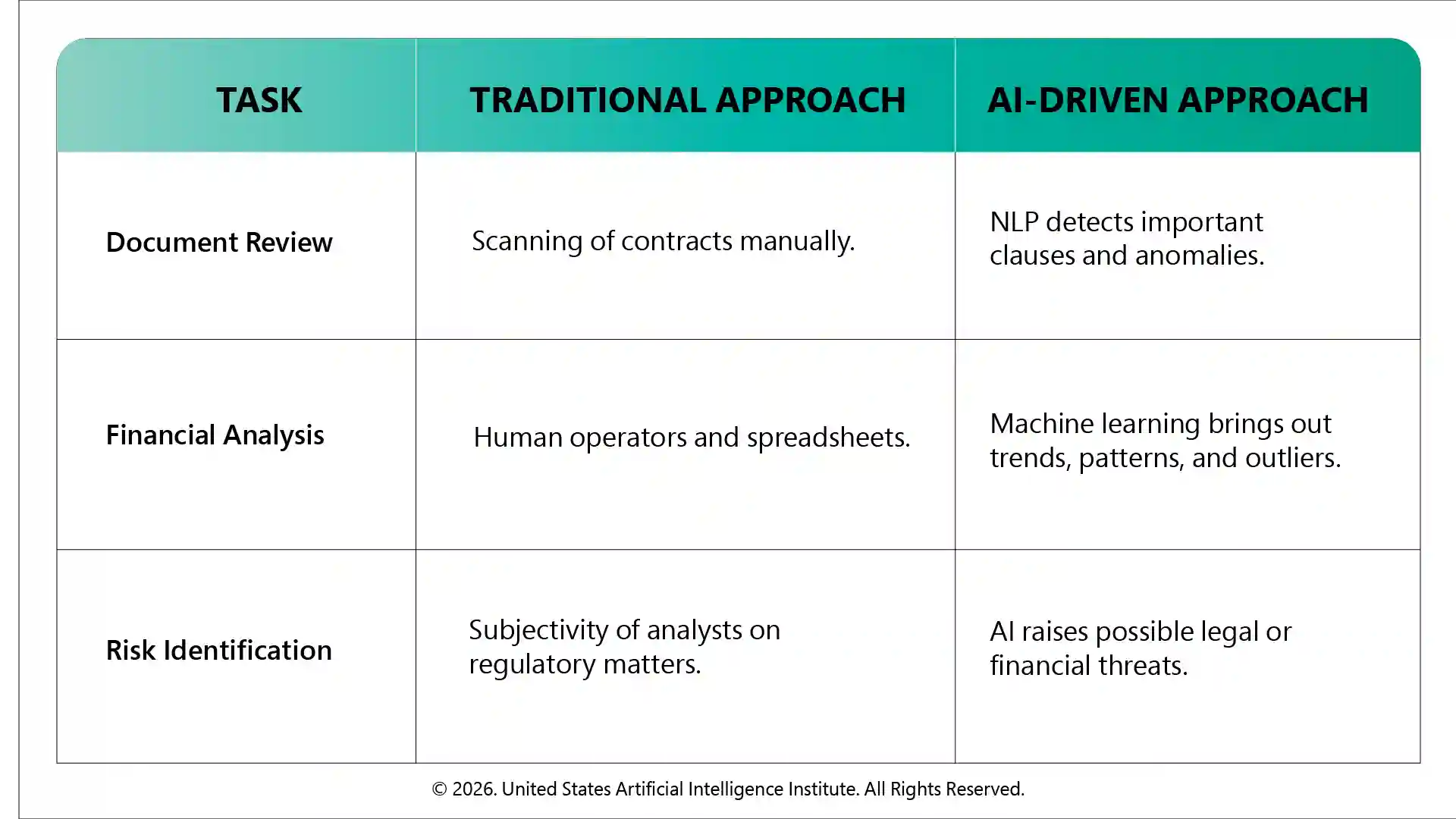
One of the most important and intense, but demanding, stages in every acquisition is due diligence. Manual review of contracts, financial statements, and compliance documents has been used historically by human teams, which is both time-consuming and error-prone. This is dramatically altered by AI.
Key Benefits of AI in Due Diligence
This chart highlights how generative AI tools enhance M&A outcomes, showing benefits like faster deal cycles, improved insights, and streamlined processes across all phases of a transaction.
Automation of routine activities and analysis of vast data volumes within a short period of time enable executives to think about strategic implications instead of spending their time on manual work.
How Does AI Help Identify the Right Acquisition Targets?
Identifying the target of acquisition is one of the most difficult parts of M&A because the conventional processes are based on personal networks, minimal information, and market reports, which may not identify any potential acquisition. AI broadens the scope by processing both the structured and unstructured data, including financial data, market trends, and customer sentiment.
AI systems can:
In addition, USAII® insight from “The Rise of AI Prioritization in 2026” highlights that AI is now moving beyond analysis to prioritization, helping leaders focus on the highest-value targets and actions in real time. This will not only enable the executives to identify the opportunities earlier, but also to make decisions that create the greatest strategic impact so that they can be able to take the most critical targets first.
These insights enable dealmakers to prioritize the highest potential value deals and make faster and better-informed decisions, and AI is not a supportive tool anymore; it is a strategic tool.
How Can AI Improve Valuation and Risk Assessment?
Valuation must be accurate to prevent overpayment and ensure successful results. The traditional valuation models are based on the previous data, unchanged assumptions, and human judgments, which might not reflect the future uncertainties. AI provides valuation through the simulation of different scenarios, the correlation of trends, and the forecasting of risks.
Examples of AI valuation and risk assessment applications are the following:
By fusing human knowledge with AI outputs, the businesses will be able to minimize uncertainties and make reliable and data-driven decisions.
What Role Does AI Play in Post-Merger Integration?
M&A fails in many instances with integration following the closure of a deal. Poor alignment of processes, cross-cultural conflicts, and systems mismatch can erode the value when not addressed proactively. AI helps in the integration process by tracking the performance, identifying challenges ahead of time, and suggesting improvements.
How AI Supports Post-Merger Integration
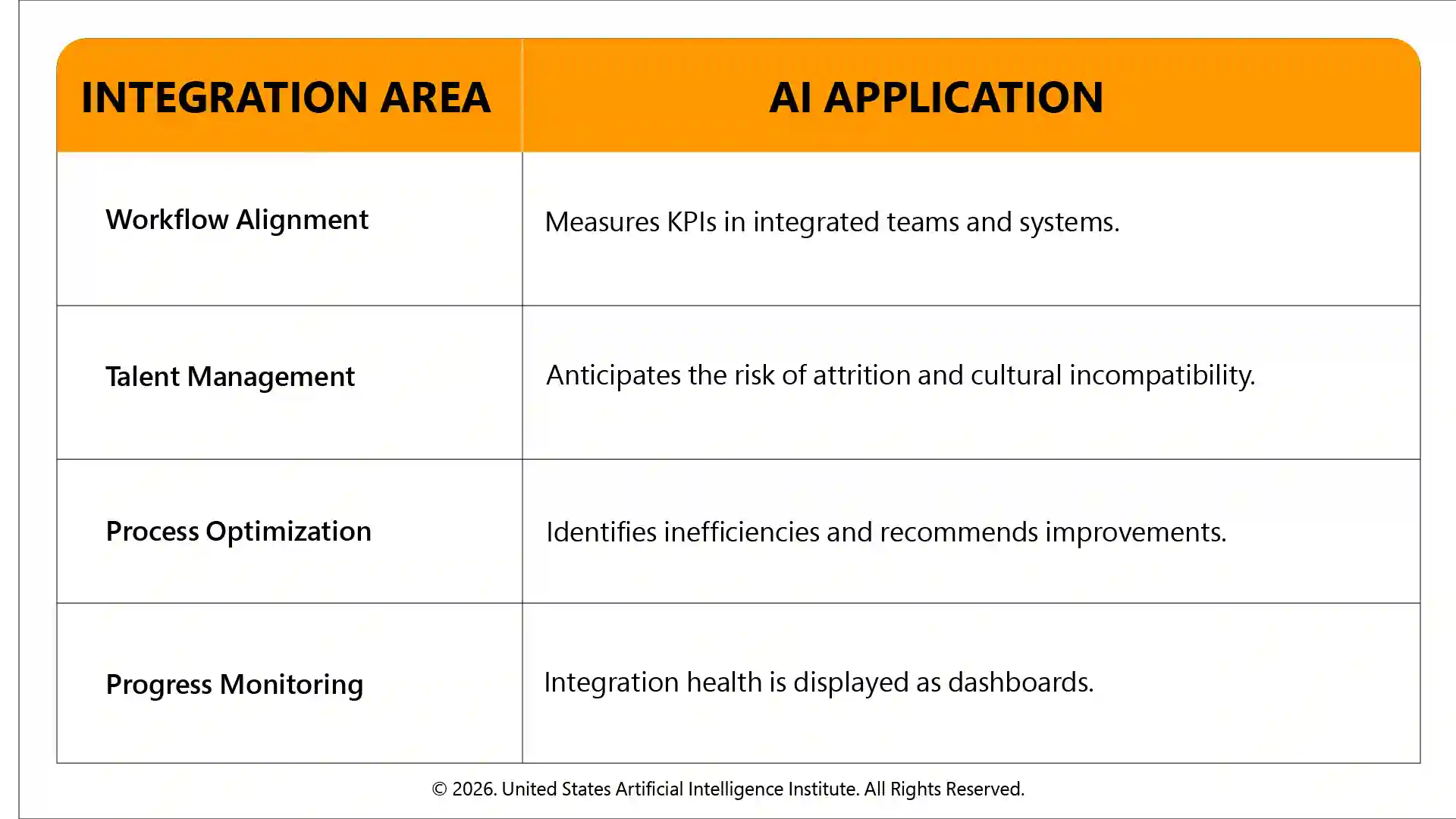
The proactive measures that companies can take with the help of AI in integration will enable a smoother transition and allow them to see the synergies that they had envisioned when planning the deal.
What Skills and Leadership Are Needed for AI-Driven M&A?
AI is not powerful unless there is strong human leadership. The trends in AI leadership in 2026 underline the idea that executives should know how to read the insights provided by AI, how to deal with the risks of the algorithms, and how to implement AI into strategic decisions.
Successful leaders in AI-based M&A usually:
Investing in AI strategy courses and certifications equips executives with the skills to harness AI effectively and responsibly. For example, the Certified AI Transformation Leader (CAITL™) program by USAII® provides structured training for leaders to manage AI adoption and strategic transformation in their organizations.
What Are the Challenges and Considerations When Using AI in M&A?
Although this may have its pros, AI use in M&A does not come without challenges. Key challenges include the following:
It is important to balance both AI-based insights and human judgment to minimize the negative consequences and maximize the benefits.
What Does the Future Hold for AI in M&A?
AI is no longer an auxiliary; it is quickly becoming a pillar of the M&A strategy. Firms that adopt AI, invest in leadership, and embrace machine learning in their operations are likely to achieve faster deal execution, and highly valued seamless integrations. The most winning organization in the future will be those that integrate AI transformation with strategic human understanding to have smarter, faster, and more effective M&A decisions.
FAQs
What is the impact of generative AI on the M&A strategy?
The generative AI is being applied to simulate the business conditions in the future and model the results of integrations prior to the deals.
What are the emerging AI trends for M&A in 2026?
The most popular trends in the 2026 M&A activity are AI-driven predictive analytics, real-time deal monitoring, and AI-assisted negotiations.
What is the median salary of AI-oriented M&A experts?
AI and data-driven M&A specialists in the USA can earn between $150,000 to $220,000 annually, depending on experience and expertise, as per Glassdoor.