
By Meena Elangovan, Enterprise Product, AI & Innovation Lead - Cargill, United States

Artificial Intelligence (AI) is reshaping how organizations operate, compete, and deliver value to customers. Enterprises increasingly leverage AI to automate workflows, enhance decision-making, and create personalized customer experiences across the commercial lifecycle.
One of the most impactful opportunities lies within the Lead-to-Cash value stream, spanning the entire customer engagement journey from initial exploration to post-sale support and long-term relationship growth.
Research from McKinsey & Company shows that approximately two-thirds of B2B buyers now prefer digital or hybrid engagement across the purchasing journey. Boston Consulting Group reports that AI-driven commercial analytics can boost sales productivity by up to 30%.
This article presents insights from an enterprise transformation initiative that redesigned the Lead-to-Cash commercial value stream using AI-enabled capabilities, guided by the Leading AI Transformation through an Integral Product Mindset framework.
Lead-to-Cash Value Stream Challenge
The Lead-to-Cash value stream typically includes three stages:
Pre-Sale: Explore → Discover → Evaluate → Decide
Order-to-Cash: Order Creation → Processing → Fulfillment → Invoice → Payment
Post-Sale: Customer Support → Feedback → Retention → Growth
In many organizations, these activities are fragmented across departments and disconnected from technology systems.
Common challenges observed during assessment:
These challenges often lead to slower sales cycles, higher operational costs, and an inconsistent customer experience.
Transformation Goals:
AI Transformation with an Integral Product Mindset Framework
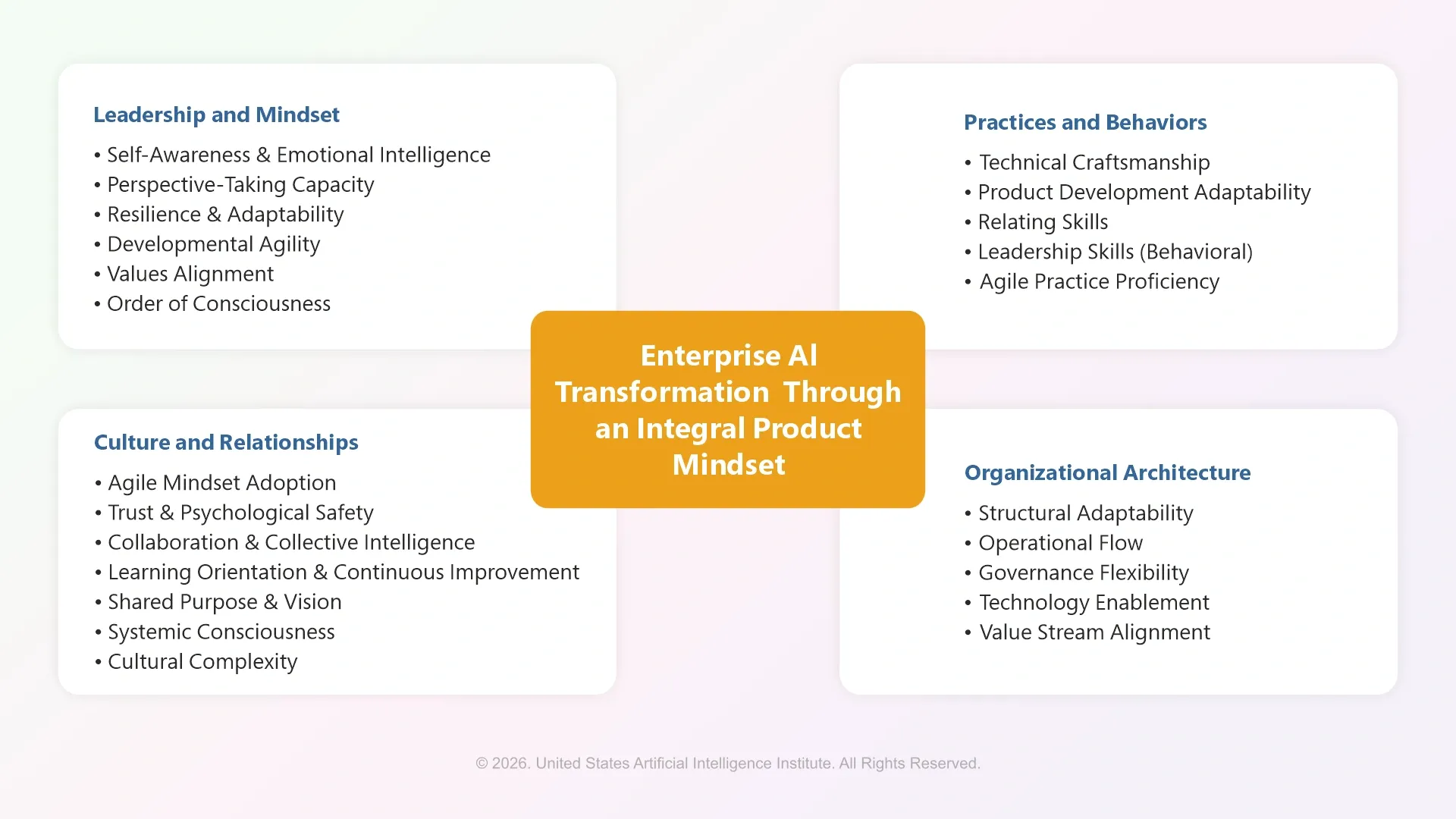
To guide the transformation, the Leading AI Transformation through an Integral Product Mindset framework was applied. This framework provides a holistic approach to enterprise AI transformation, aligning leadership mindset, organizational culture, operating models/practices, and data & technology capabilities/architecture. Integrating these dimensions ensures AI initiatives deliver sustainable business value, not just isolated automation.
Phase 1: Diagnose the Current State
The transformation began with a comprehensive assessment of the Lead-to-Cash value stream.
Key activities included:
This assessment identified 40 friction points, including:
These findings revealed significant opportunities for AI-enabled automation and digital self-service.
Phase 2: Direction - Define the AI Transformation Strategy
Based on diagnostic insights, three strategic priorities were defined:
Gartner predicts that by 2028, over 60% of B2B sales interactions will be digitally assisted by AI technologies, making these capabilities essential for competitiveness.
Phase 3: Design the AI-Enabled Commercial Architecture
The transformation focused on a digital architecture that supports intelligent commercial operations.
Key capabilities included:
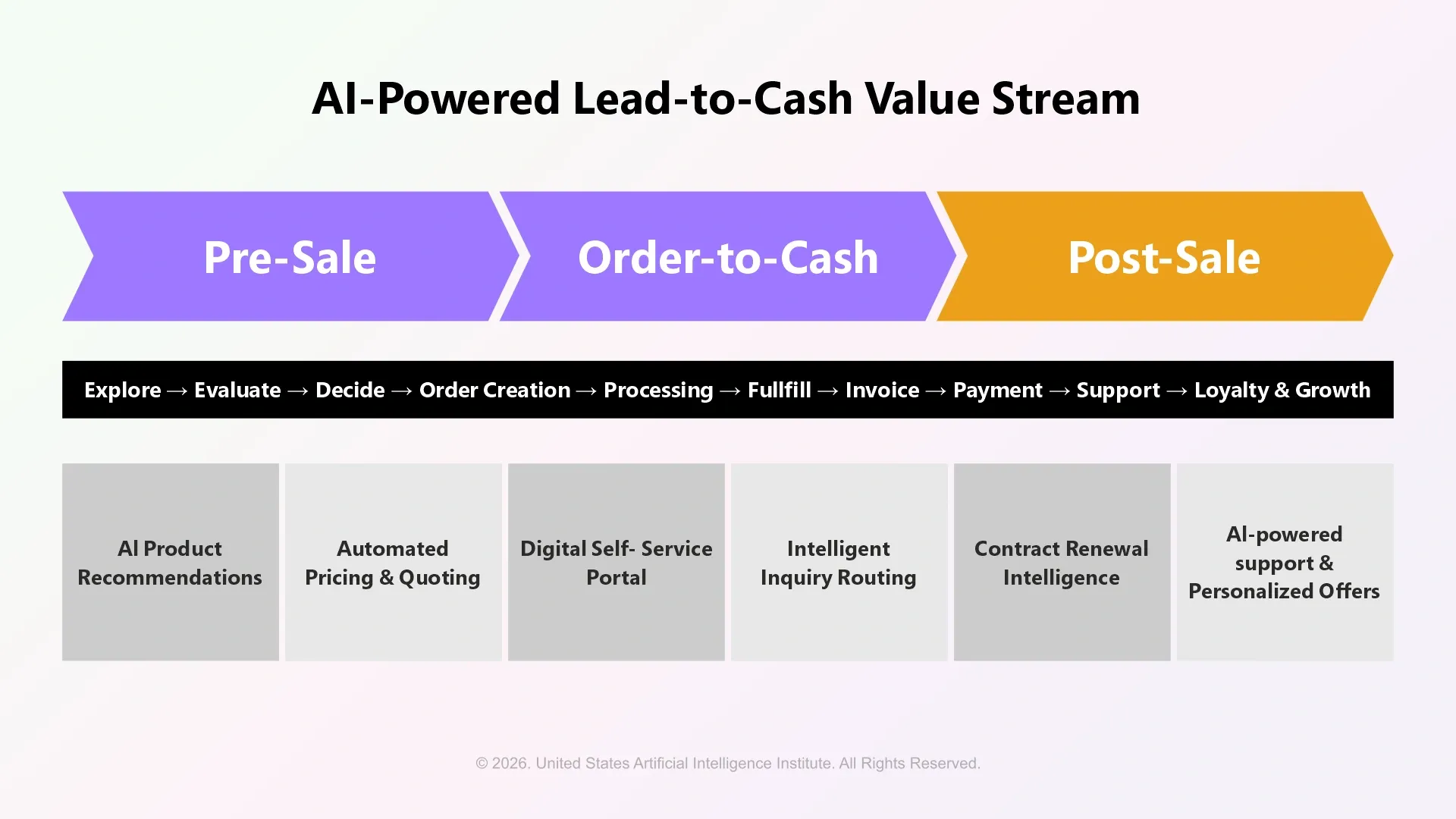
The goal was not simply to introduce isolated AI tools but to embed intelligence directly into commercial workflows, enabling employees and customers to interact more efficiently with enterprise systems.
Phase 4: Develop and Deploy High-Impact AI Use Cases
AI use cases, prioritized and implemented, across the Lead-to-Cash value stream included:
Integral Transformation Application
While AI technology was central to the initiative, sustainable transformation required a broader perspective.
Business Impact
The transformation delivered measurable improvements:
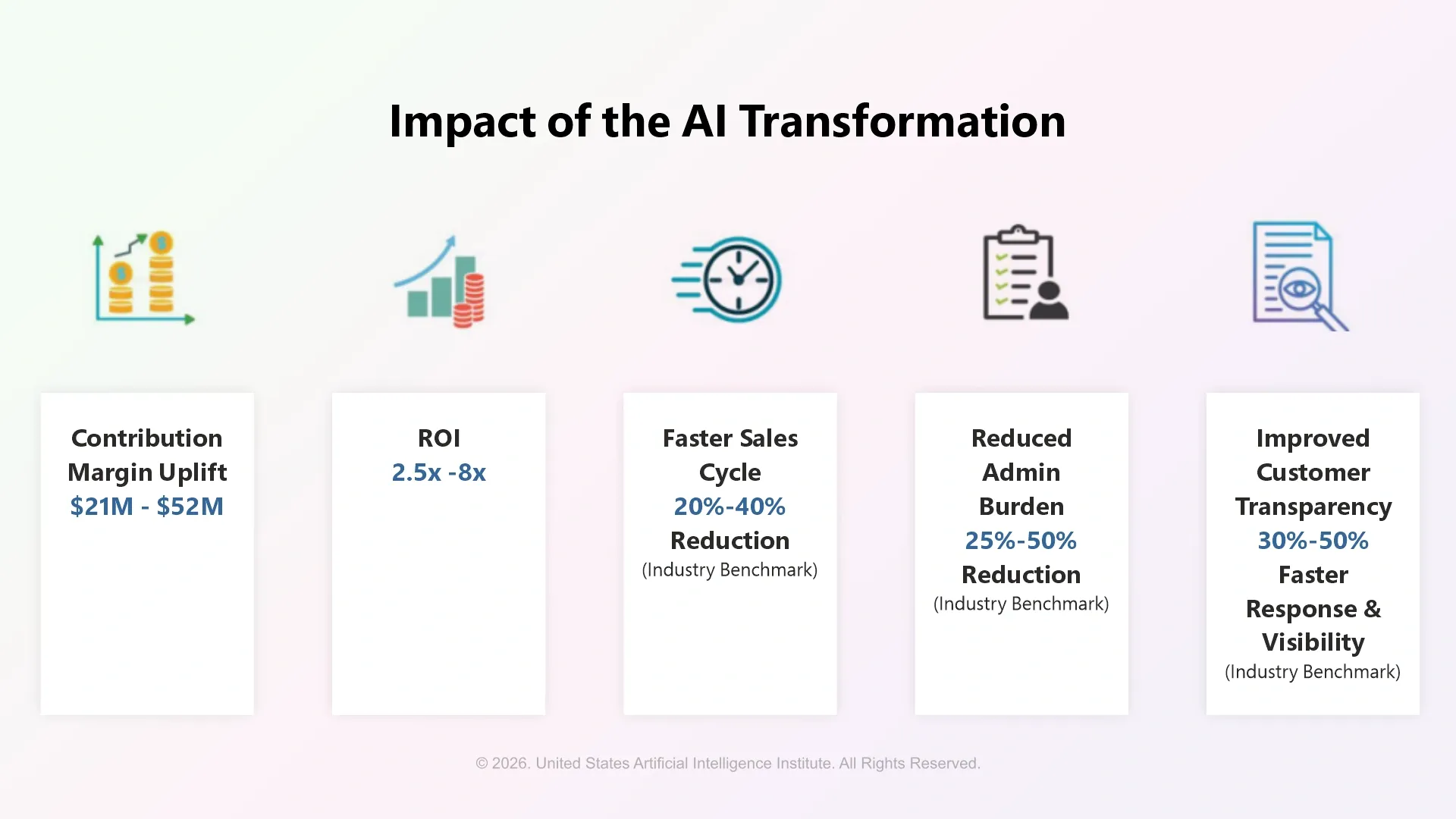
This initiative also established a scalable digital foundation for continuous innovation.
Challenges and Lessons Learned
As with many enterprise AI initiatives, several challenges had to be addressed.
Despite these challenges, the initiative demonstrated that AI transformation becomes far more effective when aligned with clear business outcomes and organizational readiness.
Responsible AI and Governance
Embedding AI requires strong governance, including:
Responsible AI practices ensure systems scale while maintaining trust and compliance.
Leadership Insight: AI Transformation Is Organizational Transformation
A key lesson: AI transformation cannot succeed through technology alone.
Success requires alignment across:
The Leading AI Transformation through an Integral Product Mindset framework ensures AI initiatives transform work across the enterprise, delivering sustainable competitive advantage and enhanced customer experience.
Conclusion
AI is rapidly becoming a defining capability for modern enterprises. In commercial operations, applying AI across the Lead-to-Cash value stream offers significant opportunities to improve efficiency, enhance customer engagement, and accelerate revenue growth.
However, successful transformation requires more than technology implementation. Organizations must align leadership vision, cultural readiness, operational practices, and digital infrastructure.
By adopting an integral transformation approach, enterprises can embed AI into the way work is performed across the organization, unlocking long-term competitive advantage while delivering meaningful value to customers.