
Most organizations already have AI tools in place. Far fewer have an actual strategy behind them, and the data shows that gap comes with real consequences. A June 2026 study by Info-Tech Research Group, found that enterprises with a formal, governed artificial intelligence strategy achieve measurable impact 60% of the time. Organizations without one manage that just 20% of the time.
That gap lines up with a broader readiness problem. Deloitte's 2026 State of AI in the Enterprise report found that 74% of organizations plan to adopt agentic AI within the next two years, yet only 21% currently have a mature governance model in place to support it.
Closing that gap starts with strategy. This blog focuses on what it actually takes to build an AI-fueled organization, walking through the strategy, structure, and steps required to move from adoption to real transformation.
What is an AI-Fueled Organization?
An AI-fueled organization does not just use AI tools without any strategy. AI capabilities sit inside core business processes, decisions lean on AI-generated insight as a matter of course, and teams across every function, not just the technical ones, actually know how to work alongside these systems. Getting there takes a deliberate strategy. It does not happen through incremental tool adoption alone.
The Building Blocks of an Effective AI Strategy
Before any AI initiative gets off the ground, a handful of foundational elements need to be in place. Overlooking these is one of the most common reasons AI strategies stall before reaching scale. Listed below are a few common blocks.
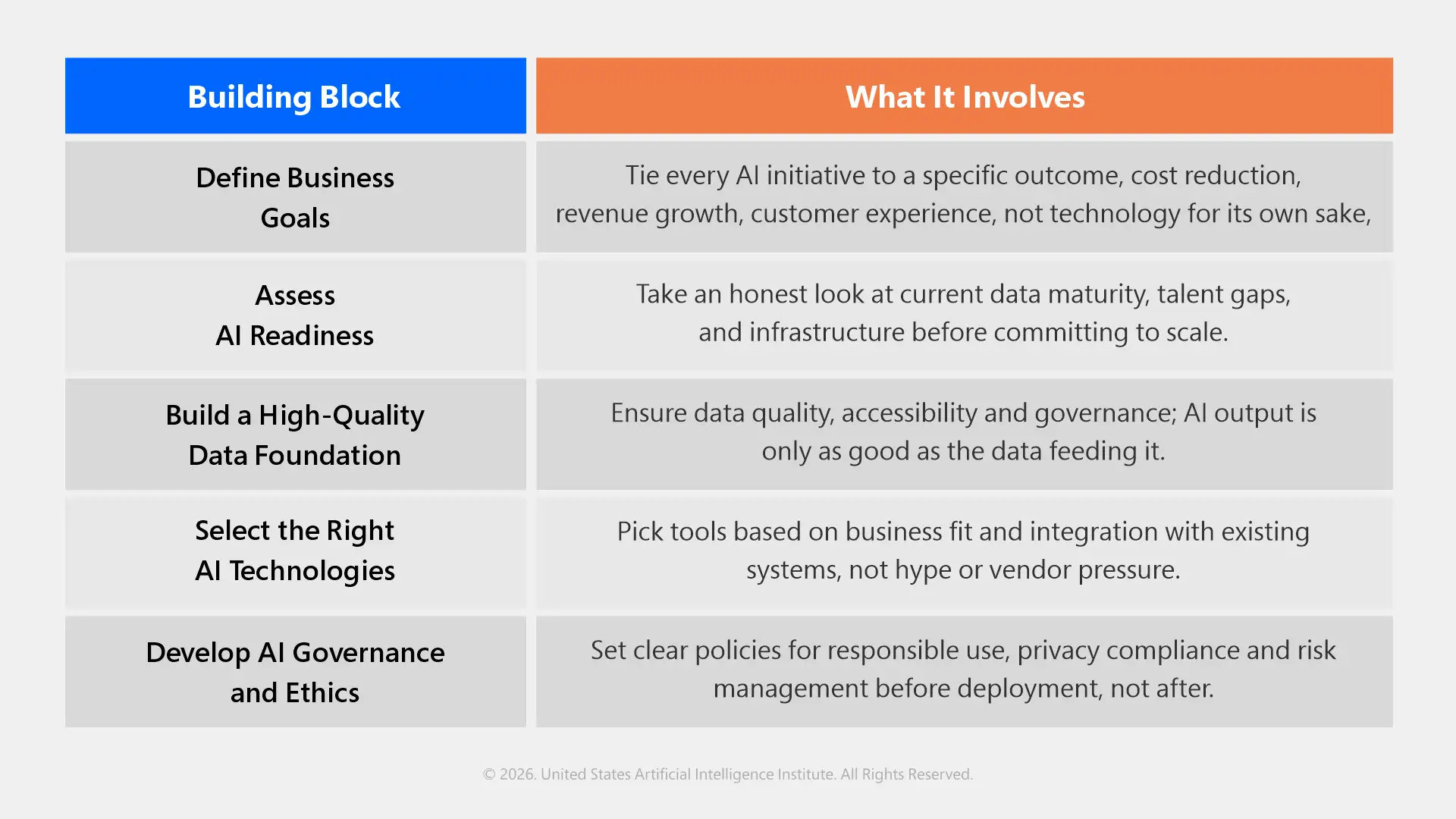
Step-by-Step Process of Creating an AI Strategy
Building the strategy itself tends to follow a consistent sequence. Each step builds on the one before it as given below.
Step 1: Identify High-Impact AI Use Cases.
Start by mapping business problems where AI can actually create measurable value, not the most technically impressive application you can find. A useful filter: does solving this problem move a metric leadership already cares about?
Step 2: Prioritize AI Initiatives
Rank potential use cases by feasibility and business impact instead of chasing every promising idea at once. Most organizations have more good ideas than they have data maturity or budget to execute well.
Step 3: Build The Right Team
AI strategy should not be just about one technical department. The teams that work combine data science expertise with business context and domain knowledge from the functions the strategy will actually touch.
Step 4: Choose the Right AI Infrastructure
Pick platforms and tools that integrate with what Is already in place and can scale as adoption grows, rather than whatever looked most impressive in a demo.
Step 5: Launch Pilot Projects
Test at a smaller scale first, with success metrics defined before the pilot starts, not decided after the results come in. Common metrics include time saved per task, error rate reduction, cost per outcome, adoption rate among target user, and more.
Step 6: Measure ROI and Scale
Use the metrics from Step 5 to make an honest call on what scales, what needs adjusting, and what gets cut. This is usually where a strategy either proves itself or quietly falls apart.
Common Pitfalls When Building an AI Strategy
A few mistakes show up again and again across organizations going through this process:
Future Trends Shaping AI Strategy in 2026
Agentic AI, systems that act with increasing autonomy, is moving from experimentation toward mainstream enterprise use. That shift raises the stakes on strategy considerably, since autonomous systems need oversight built into the strategy from day one, not bolted on afterward. Leaders looking to get ahead of this shift can find a deeper breakdown in USAII's AI transformation roadmap every leader needs in 2026, which walks through the practical steps for navigating this next phase of enterprise AI for AI leaders.
How AI Leadership Certifications Support Strategy Development
Given how much leadership judgment shapes AI strategy, formal upskilling at the executive level has become genuinely relevant. USAII's Certified AI Transformation Leader (CAITL™) program is built specifically for senior executives, business leaders and C-suite professionals leading this kind of transformation, with no technical background required.
The program covers AI strategy development, data governance, cross-functional adoption and risk frameworks, which lines up directly with the building blocks outlined above. It is delivered through a self-paced format with 2 live masterclasses, built for decision-makers who need this fluency.
Conclusion
Becoming an AI-fueled organization is not a single initiative with a finish line. It is an ongoing shift in how a business operates, one that starts with a deliberately built strategy rather than a pile of disconnected tools. The organizations seeing real impact are the ones that treated strategy as step one, not something bolted on after AI projects were already underway.
FAQs
Can smaller organizations build an effective AI strategy without a dedicated AI team? Yes, many succeed by assigning cross-functional ownership instead of building a separate AI department from scratch.
How often should an AI strategy be revisited once implemented?
Most organizations review their AI strategy every 6 to 12 months, given how fast AI capabilities and governance requirements keep evolving.
How are multi-agent AI systems changing strategy considerations?
Multi-agent systems introduce coordination and oversight challenges beyond single-agent deployments, pushing governance and monitoring further up the priority list.