Artificial intelligence is no longer a functional technology feature; it has become a business growth engine. Organizations in all sectors are using AI to optimize processes, predict analytics, improve customer experience, and be innovative.
This has led to a new role on the executive level, the Chief AI Officer (CAIO). Gartner (2026) found in a survey that 91% of high-maturity organizations now have an AI leader dedicated, which highlights the criticality of AI leadership to organizations that are successfully scaling AI programs.
In this blog, we are going to discuss the increased significance of the CAIO, their main responsibilities, and the ways organizations can use AI leadership to become innovative, strategic, and grow sustainably.
Why CAIO Demand Is Rising
AI leadership is required by companies that want to expand AI efforts successfully. Data from 2026 reflect the following:
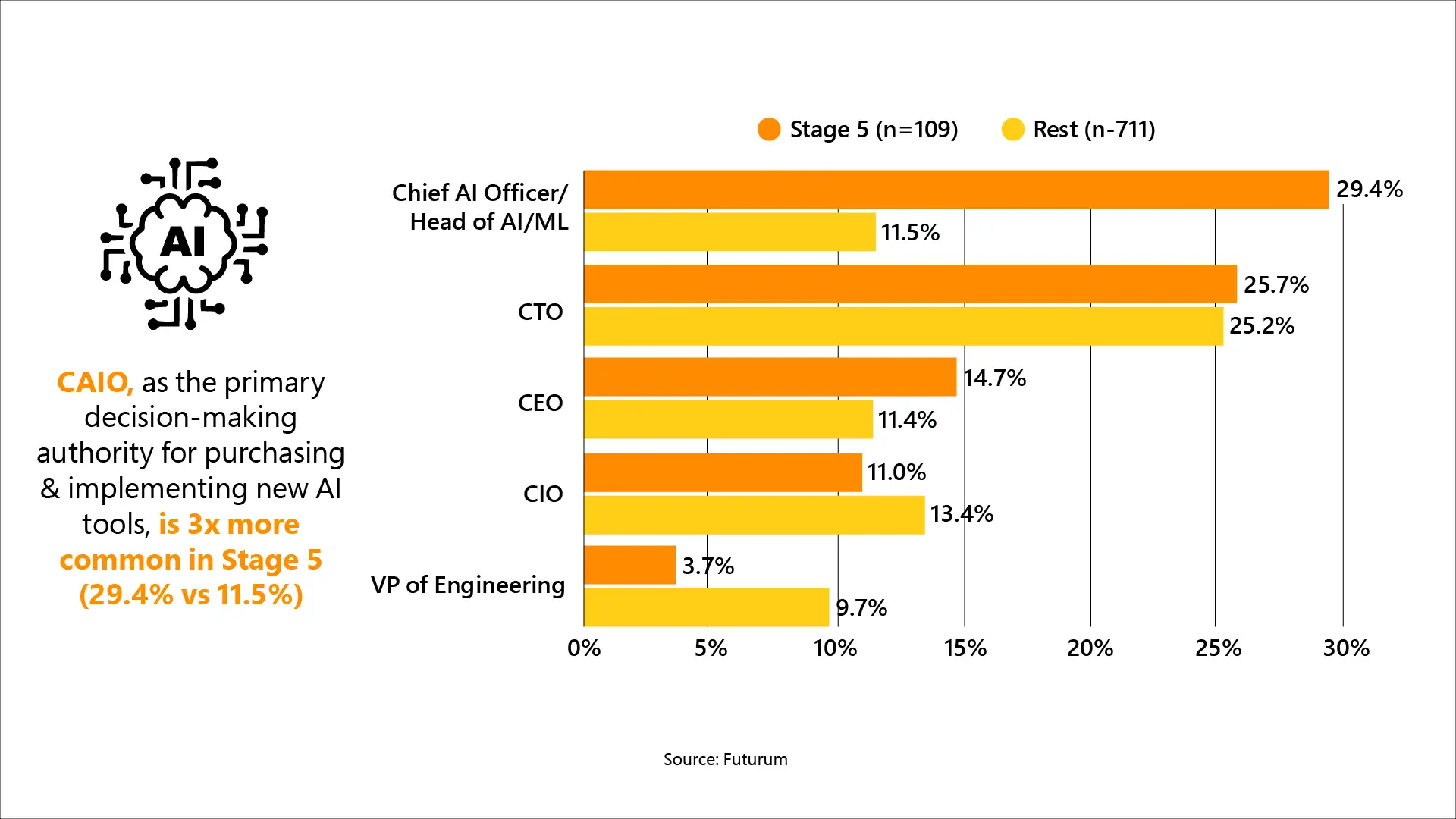
The most common applications of CAIO in the top industries are motivated by the enterprise-wide AI integration, generative AI projects, and the demand for the measurable ROI of AI investments.
How CAIO Helps in Overcoming Challenges in AI Adoption
The CAIO is a multidimensional position, which is a blend of technical expertise and strategic business leadership. Some of the main CAIO roles include:
The centralization of AI leadership will help to prevent the fragmentation of AI projects, investments with improper orientation, and ineffective operations.
Transforming Business Strategy Through AI
CAIOs are key to implementing AI into larger business plans. This includes the following:
The use of AI is no longer a matter of choice; it is the core of being competitive. Companies that do not lead with AI are prone to losing their competitive advantage as competitors invest in intelligent systems, making the business more efficient and effective, and bringing revenue growth.
The Future of AI Leadership
A future trend is the increase in the number of CAIOs due to the development of AI technologies. The current trends that influence this role are:
The CAIO is a necessity to achieving sustainable change as organizations realize that AI is a key engine of growth.
Also read about AI Leadership Trends 2026 What Executives Need to Know to understand how AI leadership in 2026 has shifted from experimentation to execution, governance, and human-AI collaboration, requiring executives to rethink strategy and leadership models
Preparing for the CAIO Role: AI Certification Pathways
For professionals aiming to step into AI leadership, structured learning programs. Certified AI Transformation Leader (CAITL™) and Certified Artificial Intelligence Scientist (CAIS™) by USAII® are two of the most popular AI leadership certifications offered to senior professionals and decision-makers.
Certified AI Transformation Leader (CAITL™)
Certified Artificial Intelligence Scientist (CAIS™)
Both AI certifications offer guided learning, work structure, and strategic understanding to equip professionals with the changing role of CAIO.
The Way Forward
AI is changing the executive environment. The Chief AI Officer plays a crucial role in aligning technical capabilities with business strategy, fostering innovation, efficiency, and informed decision-making.
The organizations that adopt AI leadership will be in a better position to overcome risks, take opportunities, and define the future of their industries. In the case of professionals, strategic understanding, ethical management, and cross-functional proficiency are the main factors that can lead to success in this dynamic world.
FAQs
What industries are implementing CAIO positions at the quickest rate?
The industries that employ CAIOs the most are finance, healthcare, retail, and tech, as there is a high level of AI integration and data-driven operations.
What are future CAIOs supposed to specialize in?
Such skills as generative AI strategy, AI explainability, edge AI, AI-driven product innovation, and cross-industry collaboration are taking centre stage.
Does a CAIO need technical coding knowledge?
Not necessarily leadership skills, strategic vision, and AI literacy are frequently more important than actual programming.