Have you ever felt like you know what AI is, how it works, and even have hands-on experience with the top AI tools, but still are not able to level up your career as an AI Engineer or Consultant? If yes, then this read is for you to get insights into one of the top AI certification programs that can not only help you build strong AI fluency but also help you enhance your portfolio to build employers' trust. Artificial intelligence has already moved from pilot projects to the center of how organizations hire talent, invest, and compete in the global market.
Recently, Gartner projected a net global increase of 1.7 million jobs by 2030, driven by 10.6 million new jobs created versus 8.9 million eliminated by AI. This is the impact AI is creating across the globe in every sector, and its influence is growing and multiplying every year.
Let's get started!
Why Should You Choose USAII® Certifications
Individuals are choosing AI certifications considering various crucial factors such as:
USAII®'s AI certifications are globally recognized and vendor-neutral. All USAII® AI certifications are designed carefully, keeping the AI job market in mind. Its curriculum covers trending AI skills that employers value today. USAII® has already trained 150,000+ professionals across AI leadership, engineering, consulting, and research.
What Is the Difference Between CAIE™ and CAIC™?
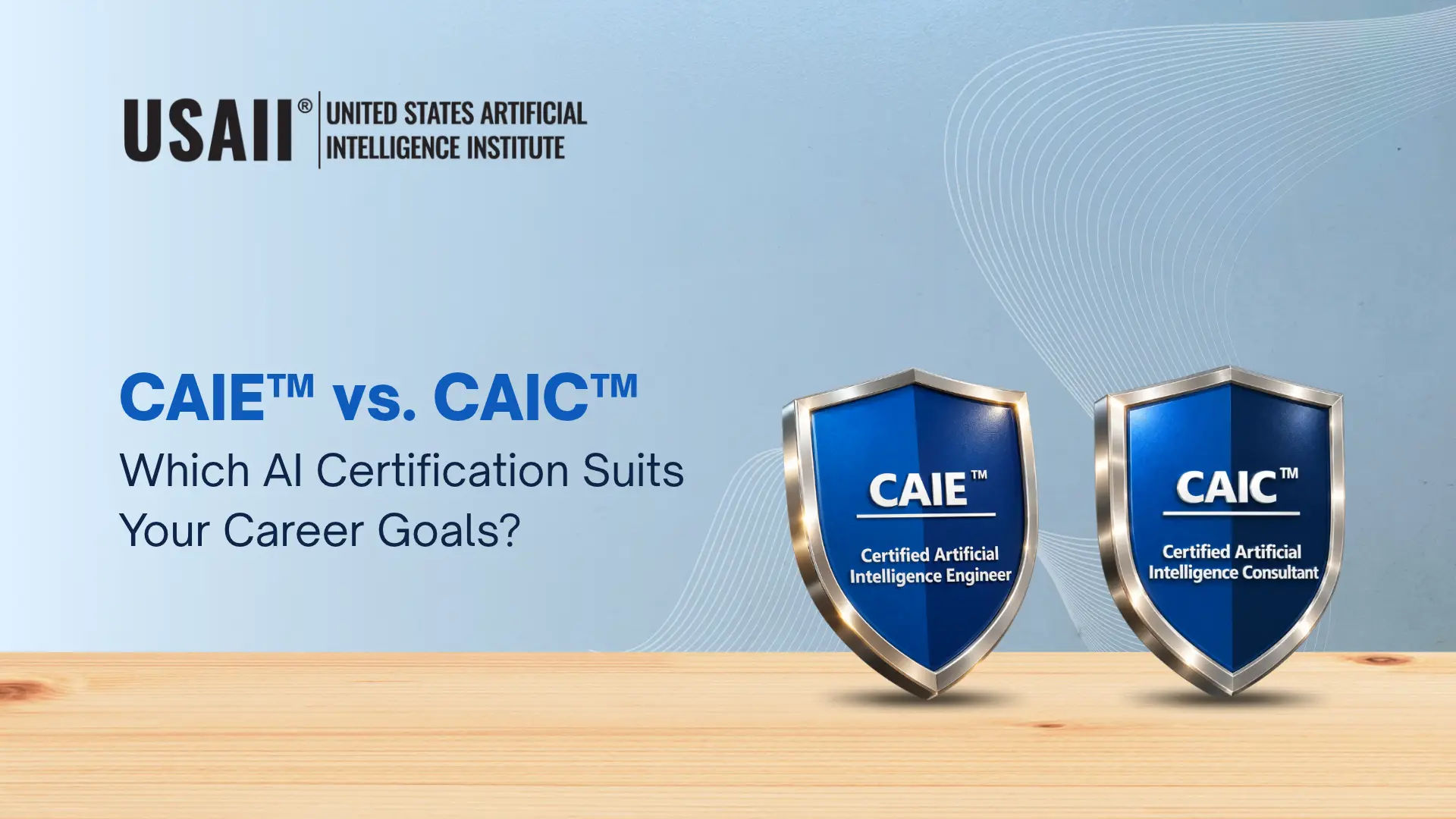
Delve into the details of CAIE™ and CAIC™ certifications to understand which can be the best fit for your current and future career goals. Get a closer look at them to choose wisely:
Certified Artificial Intelligence Engineer (CAIE™) Certification
Currently, an average AI engineer salary is U.S. is $154,525 per year (Indeed, 2026). If you aim to become an AI engineer, you can enroll in the CAIE™ program today and earn a globally recognized AI engineer certification with a shareable digital badge.
Certified Artificial Intelligence Consultant (CAIC™) Certification
USAII® offers three specialized career pathways under CAIC™:
1. Certified AI Consultant – Product Management (CAIC-PDM™)
Designed for Product Managers, Product Strategists, Product Leaders, and professionals who oversee the overall product management lifecycle.
2. Certified AI Consultant – Project Management (CAIC-PM™)
Designed for Project Managers, Project Strategists, Project Leaders, and professionals who oversee the overall project management lifecycle.
3. Certified AI Consultant – Human Resources (CAIC-HR™)
Designed for HR professionals to manage modern HR operations, learn AI-powered recruitment, and automate mundane HR tasks to increase their everyday productivity.
As per recent data from ZipRecruiter, the average annual pay for an Artificial Intelligence Consultant in the United States is $113,566.
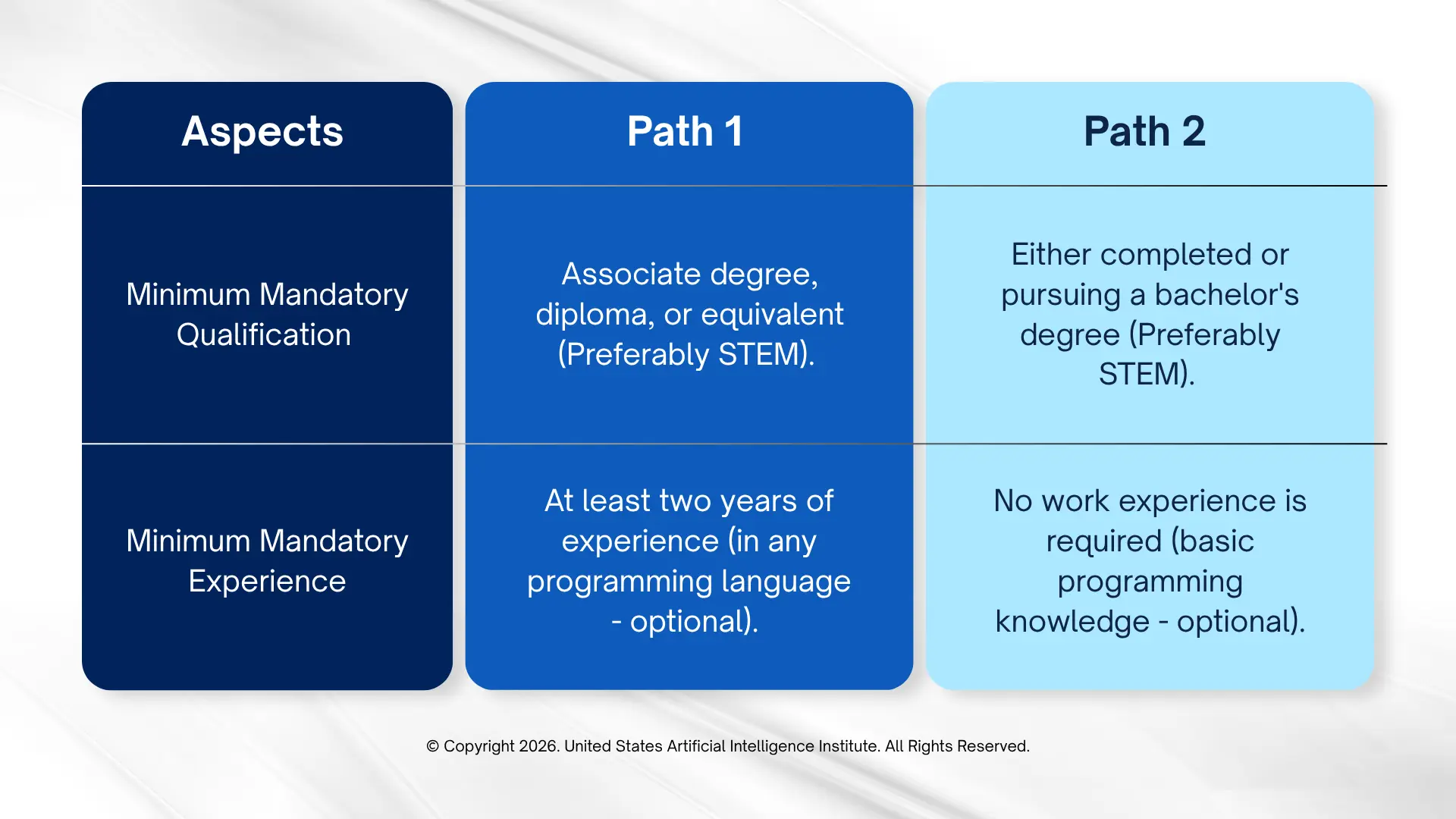
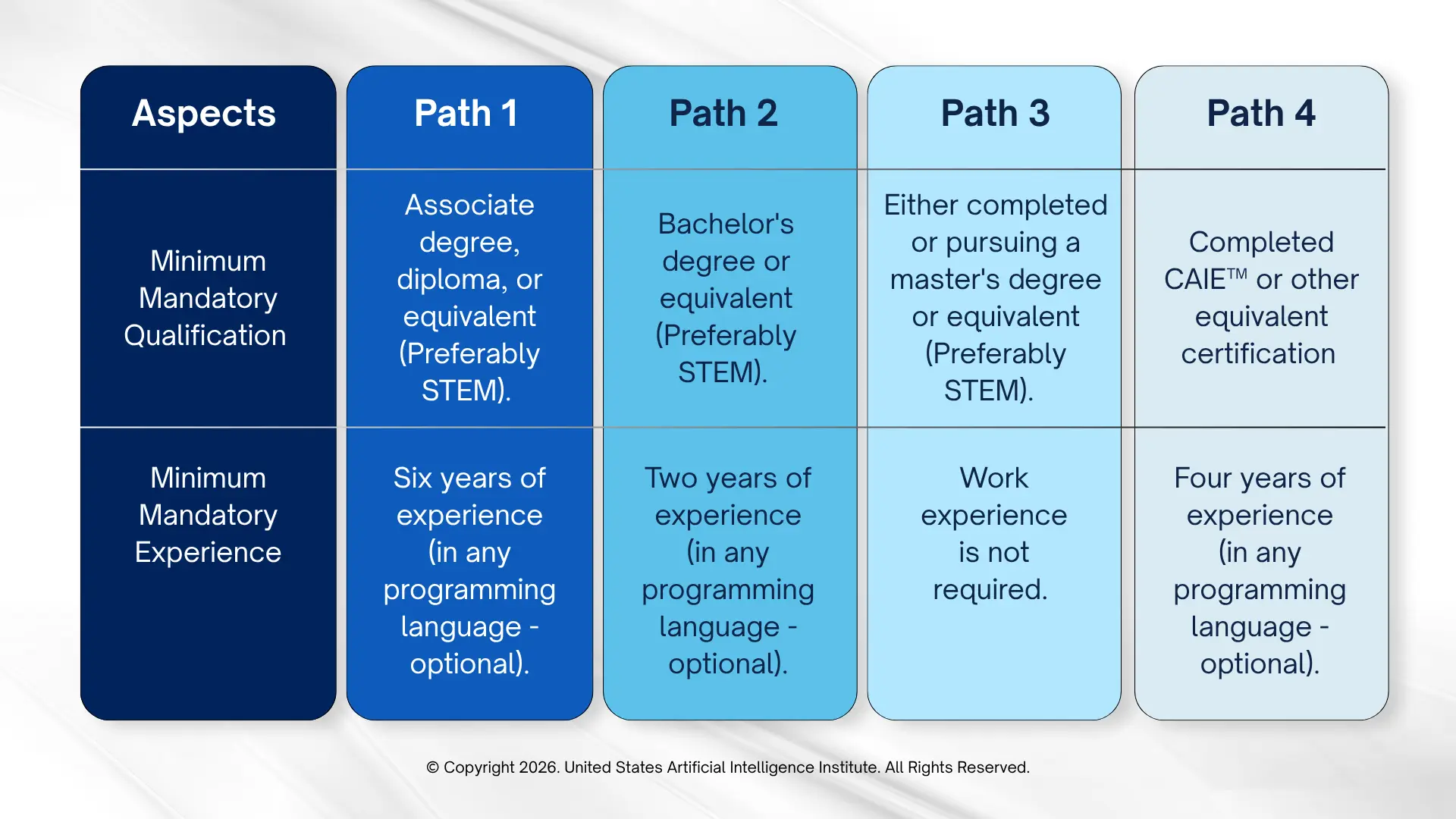
Next, we cover the eligibility requirements for these AI certifications, helping to check your eligibility right away before enrolling.
Eligibility Requirements for CAIE™ and CAIC™
Certified Artificial Intelligence Engineer (CAIE™)
Certified Artificial Intelligence Consultant (CAIC™)
Which USAII® Certification Is Right for You: CAIE™ or CAIC™
Choosing between CAIE™ and CAIC™ depends on the career path you want to pursue. USAII®’s both of these certifications are designed to help professionals develop relevant AI skills to strengthen their professional capabilities that help them work in the most growing and challenging roles such as AI Engineer and AI Consultant.
As these certifications are globally recognized, they are vendor-neutral and provide structured AI learning, pick the program that fits your goals so you can get closer to reaching your career aspirations.
Frequently Asked Questions
An AI Engineer focuses on developing, testing, and maintaining AI systems, while an AI Consultant helps organizations identify problems that can be solved using AI and plan AI adoption to solve them.
Yes, by pursuing CAIC™ certification from USAII®, you can learn AI consulting skills without the need for a technical background.
You can consider various crucial factors before investing in an AI certification, such as curriculum, industry recognition, learning flexibility, and alignment with your intended career path.