By Naif Alharbi, Director of IT - Mitsubishi Electric Saudi Ltd, Saudi Arabia

An IT director’s journey from SAP to predictive maintenance, IVR, and self-inspecting escalators. I work in elevators and escalators. And this is our AI transformation roadmap for FY26–FY27. Yes, not the most obvious AI domain, you’d think. But MELSA has 12,000 active contracts for installation, modernization, maintenance, and spare parts. We have 1,100 employees and thin margins.
We built a solid digitalization plan that included fifteen initiatives, SAP configurations, workflow automation, field mobility, CRM, and dashboards with due approvals. But automation has limits. It can’t predict which elevator motor will fail next week. It can’t answer a customer’s call about a stuck lift early morning. It can’t tell a drone to inspect a site only when something looks wrong. So, we decided to go further.
Here’s what we added across FY26 and FY27.
1. Secured the foundation:
Before any AI, we implemented PAM, SIEM, and Zero Trust. No AI without security. That was FY26.
2. Attacked the grey areas:
Procurement between MELSA and suppliers had ambiguity – manual approvals, delayed scoring. We built an AI hybrid that scores suppliers automatically and resolves 80% of grey‑area transactions without human touch.
3. Automated HSE patrols:
Instead of sending people to sites on fixed schedules, we now use AI to trigger patrols only when risk indicators change. Drones and checklists run by exception; same safety, with half the visits.
4. Predictive maintenance for elevators.
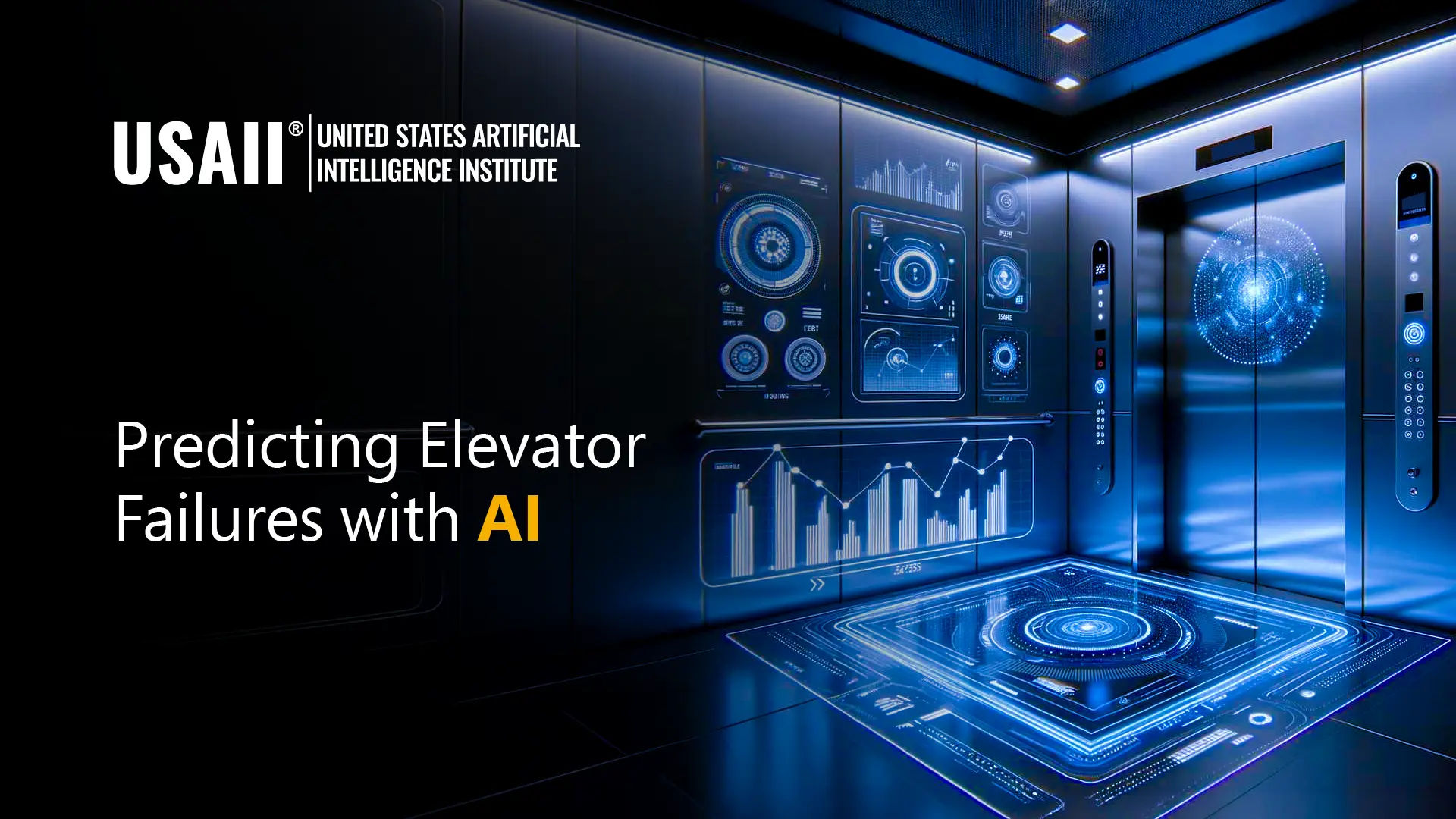
Now comes FY27’s flagship. We are putting vibration, temperature, and door‑cycle sensors on 500 units. The AI learns normal patterns. When something deviates say, a bearing heating up – it sends an alert to maintenance supervisors before the elevator stops. We estimate that 80% of failures are predictable 48 hours in advance.
5. Predict critical incidents on sites:
Using camera feeds and equipment logs, an AI model flags conditions that led to past incidents. It’s like a smoke alarm for safety hazards.
6. Remote inspections:
No more multiple visits. Sensors now perform automatic inspections as the system verifies that an escalator handrail is within spec, that a door closes properly, that lubrication levels are adequate. This turns ten physical visits into one; targeting optimizing processes.
7. Call center with an AI brain:
We are adding an Interactive Voice Response (IVR) system that understands natural language. Customers calling about a stuck elevator can describe the problem, and the AI dispatches the right technician instantly. No waiting, no transfers.
8. Original AI plan:
Receivables scoring. ERP anomaly detection. NLP dashboards. Subcontractor prediction. Every piece works together.
Now, let’s be clear. None of this replaces human judgment. The AI alerts, but a supervisor decides. The IVR triages, but an agent handles complex cases. The sensors inspect, but a technician validates. We treat AI as a co‑pilot; smart and fast co‑pilot.
What have we learned so far?
Start with security, then pick two high‑impact AI projects. For us, receivables and predictive maintenance were high-priority. Measure relentlessly and never skip explainability as auditors need to know why an AI flagged a transaction or a failing motor.
The elevator industry is old‑school. But that’s exactly why AI gives us an edge. While others react to breakdowns, we prevent them. While others send people on pointless patrols, we send drones only when needed. While others answer calls with endless menus, we answer with voice AI.
Conclusion
Automation made MELSA efficient. AI makes us intelligent. The roadmap runs through FY27, and every project ties back to margin, cash flow, safety, or customer experience. If you are in a traditional industry – construction, manufacturing, logistics; do not wait. Start with one sensor, one prediction, one voice bot. You will be surprised how fast transformation happens.