The AI coding tool market has been dominated by a handful of closed-source products, but 2026 is the year that started to change. JetBrains' Developer Ecosystem Survey 2026, based on responses from more than 15,000 professional developers, found OpenCode has reached 7% adoption and a 42% mindshare globally, notable reach for a tool with no major corporate backer.
That growth tracks a broader shift toward agentic AI. Google Cloud's ROI of AI Study found 52% of executives at organizations using generative AI already have AI agents in production, with 88% of early adopters reporting positive ROI. OpenCode is a direct extension of that same shift, AI moving from an assistive layer into an active part of how coding actually gets done.
What is OpenCode?
OpenCode is an open-source, MIT-licensed AI coding agent that runs in the terminal, with desktop and IDE surfaces also available. It was built by the team behind SST (now operating as Anomaly).
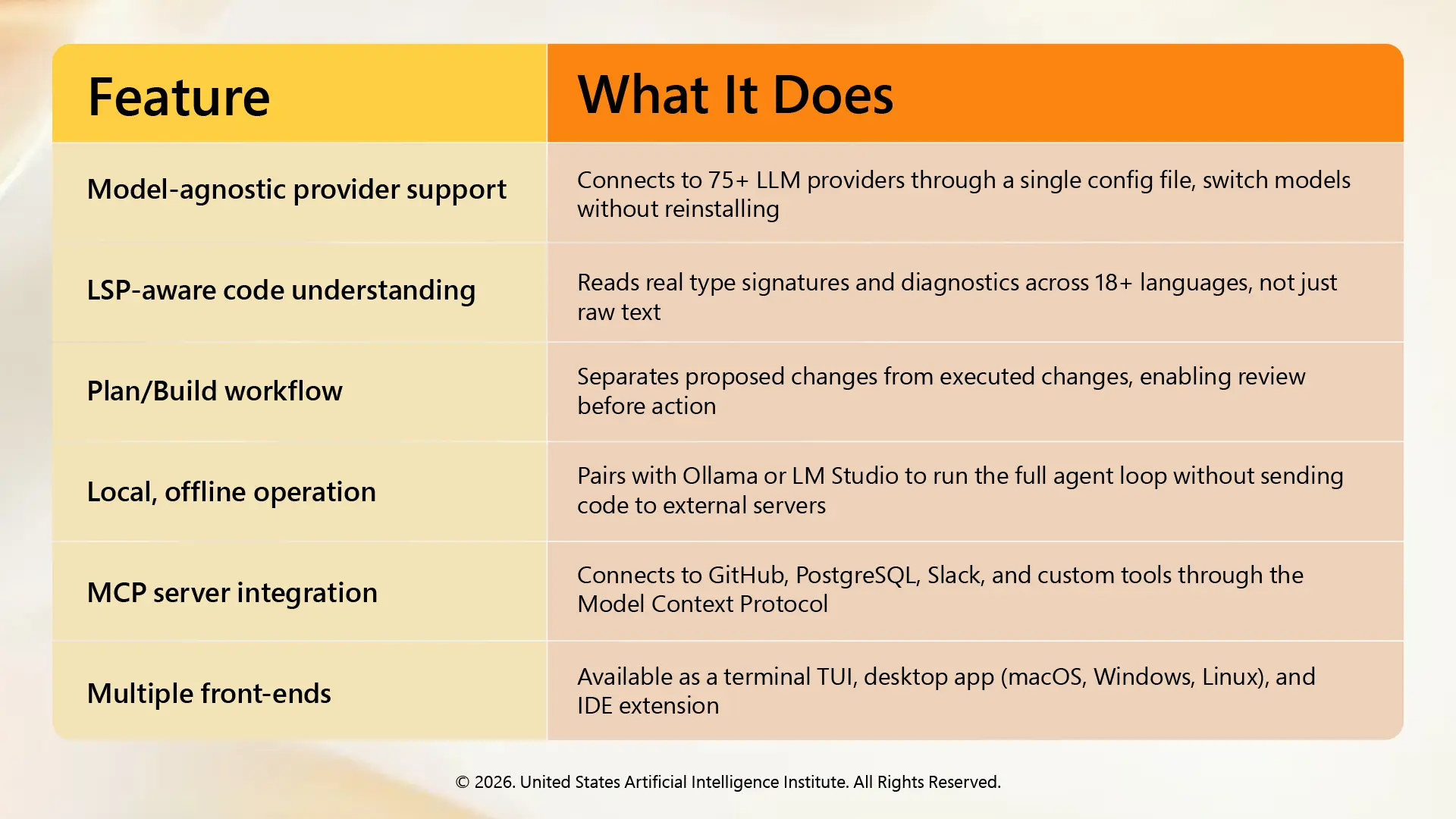
Unlike most commercial coding agents, OpenCode does not lock users into a single AI provider. It connects to more than 75 LLM providers, including Anthropic, OpenAI, Google Gemini, AWS Bedrock, Groq, Azure OpenAI, and local models run through Ollama or LM Studio. Users bring their own API keys and can switch between models through a single configuration file.
How Does OpenCode Work?
OpenCode functions as a full agent harness rather than a simple chat interface layered over a code editor. Its core components include:
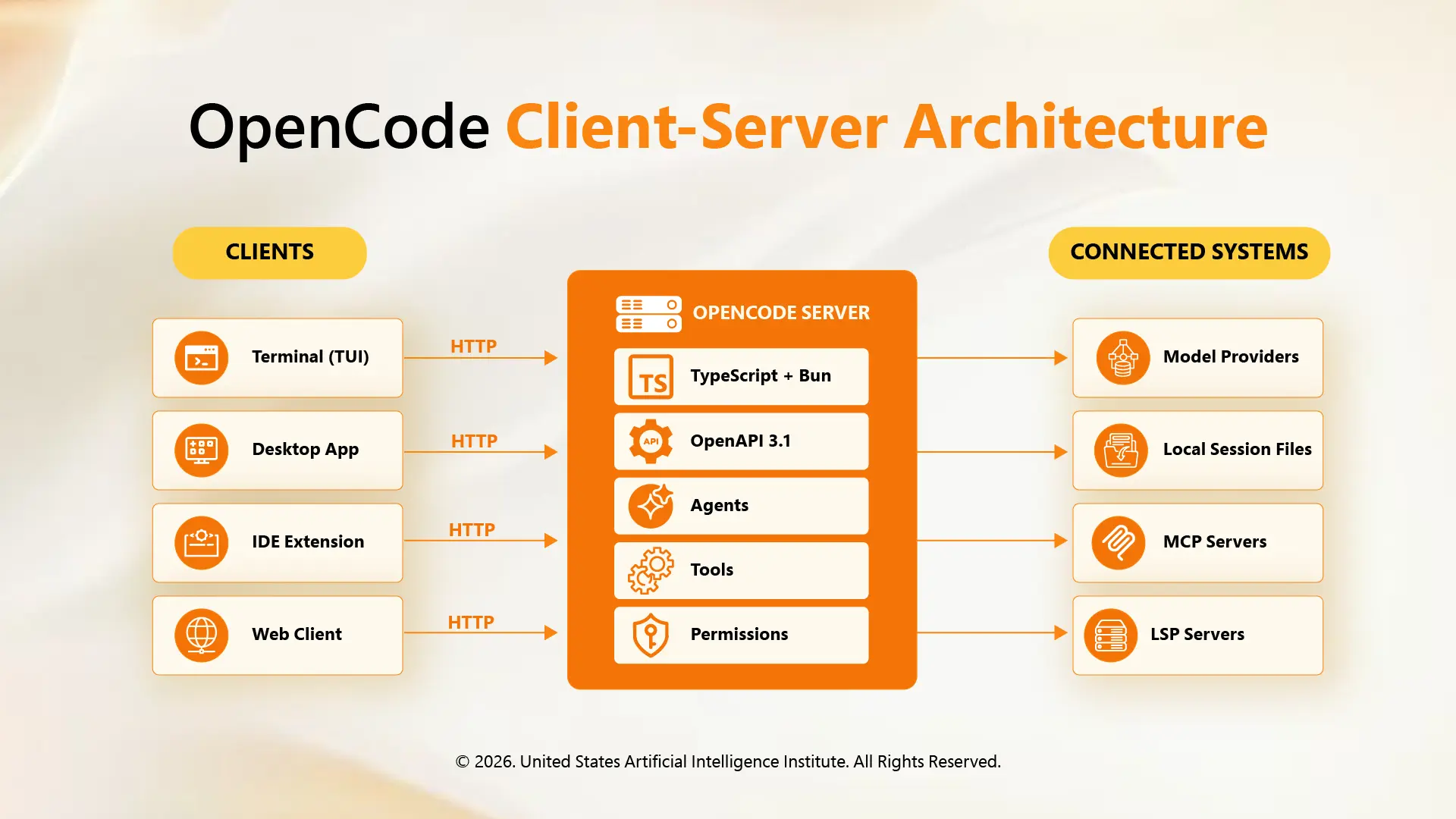
The LSP integration is a meaningful architectural choice. Most AI coding tools treat source code as plain text; OpenCode's LSP layer feeds the model live diagnostic information mid-task, allowing it to self-correct before returning a result rather than after a developer catches the error.
Key Features of OpenCode
Beyond its core architecture, several specific capabilities define what Open Code actually offers a developer day to day as listed below.
For a deeper look at how open-source flexibility weighs against proprietary tooling in AI-driven engineering, USAII®'s guide on open-source vs. proprietary AI models breaks down the same tradeoff from an AI engineering perspective, relevant well beyond coding agents specifically.
How Does OpenCode Compare With Other AI Coding Agents?
OpenCode's closest comparisons are Claude Code, Cursor, and Codex CLI, three LLM coding tools that currently dominate developer surveys, each with a distinctly different approach to model access and editor integration.
Benefits and Limitations of OpenCode AI
Every design choice that makes OpenCode distinctive also comes with a tradeoff worth understanding before adopting it.
Benefits
Limitations
Where AI-Assisted Coding Is Headed
OpenCode's growth has come without a major corporate backer, driven by developer interest in a model-agnostic, self-hostable alternative to closed, vendor-locked tools. As commercial tools shift pricing models, an agent not tied to a single provider's roadmap has real staying power.
That shift is also reshaping what AI engineering requires, understanding LLM behavior across providers, evaluating architecture tradeoffs, and knowing how agent orchestration works, not just which tool to click. USAII®'s CAIE™ certification builds exactly that depth for professionals moving into AI engineering and LLM engineering roles.
Conclusion
OpenCode is a architectural alternative to the closed, single-vendor agents leading the market. Its LSP-aware code understanding, multi-provider flexibility, and full local operation address real limitations in tools like Claude Code and Cursor at the cost of raw speed and IDE polish.
For teams evaluating agentic coding tools, the deciding factor is not GitHub stars. It is which architecture fits their constraints, provider flexibility, data control, editor integration, and speed, weighed deliberately rather than assumed.
FAQs
Can OpenCode be self-hosted for enterprise use?
Yes. Its MIT license and support for local models make self-hosting a realistic option for organizations with data residency or compliance requirements.
Does OpenCode support languages beyond mainstream ones like Python and JavaScript?
Yes, its LSP integration covers 18+ languages, including Rust, Go, C/C++, and Java, alongside TypeScript and Python.
Who should actually use OpenCode?
Developers who want flexibility across model providers, prefer a terminal-first workflow, or need self-hosted, local operation for data control.