By Ayman Mansour, Director of Information Technology - Director of Information Technology, Saudi Arabia

Artificial Intelligence is reshaping the modern commercial world. It goes beyond simple tech upgrades. It represents a fundamental shift in value creation. Leaders are starting to realize the incredible power of information. Data acts as the ultimate fuel for this new era. Organizations must evolve to thrive. They must embrace an AI transformation journey to stay relevant.
Digitalization versus Digital Transformation
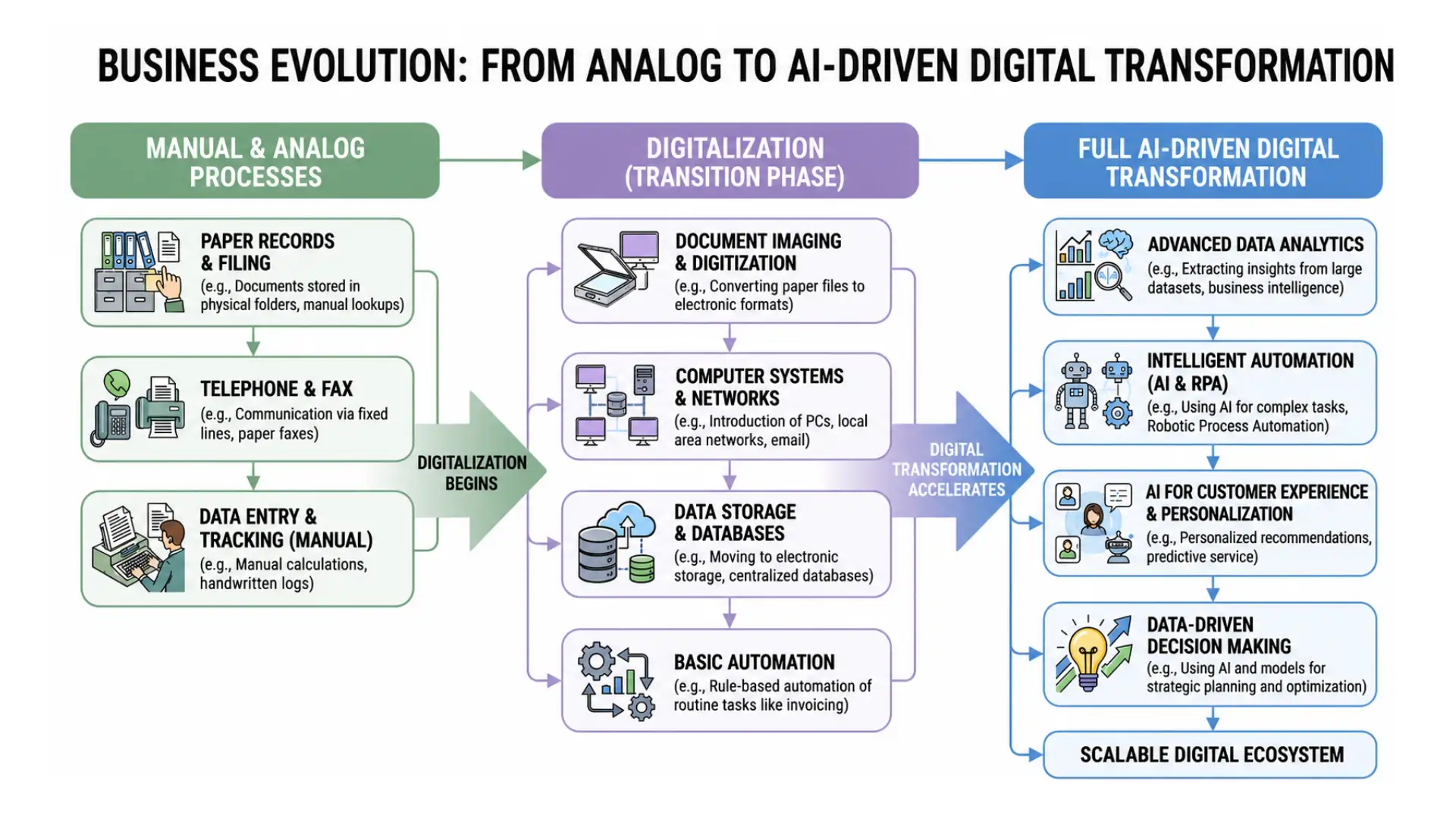
People often mix up digitalization with digital transformation. They are not identical concepts. Digitalization involves swapping manual tasks for digital tools. Think of replacing a physical thermometer with a mobile health application.
Digital transformation is far more profound. It completely overhauls how a company operates. It changes how a business engages with customers. It relies on AI systems that learn continuously. This approach seeks to unlock entirely new avenues of value. It reinvents the core operational model.
Building Blocks of AI Success
Implementing AI requires a solid base. This foundation consists of three main elements. These are technology, business, and people. Technology involves the hardware and software infrastructure. It includes the networks required to process information.
The business element requires a clear problem to solve. It also needs a definitive path to financial benefit. Finally, people are the skilled experts. They are the data scientists and engineers who execute the vision. A company might lack any of these three components. If so, its AI efforts face a high risk of failure.
Charting the Path: The Three Horizons
Planning an AI transformation can seem daunting. A helpful strategic framework is the three horizons approach. This model guides companies through different stages of technological maturity.
1. Horizon One: This stage focuses on improving current workflows. Companies use data to understand past events. The goal is to cut costs. It also aims to boost immediate efficiency and manage basic risks.
2. Horizon Two: This is the next logical step. Here, businesses begin to deeply digitalize their core operations. They use predictive algorithms to anticipate future trends. This stage significantly enhances the effectiveness of the existing business model.
3. Horizon Three: This is the ultimate aspirational destination. The organization completely reinvents its business model. It creates systems that learn and adapt on their own. These autonomous models uncover new insights automatically. They take action with very little human input. This disrupts traditional markets and builds strong competitive advantages.
Unique Economic Power of AI Assets
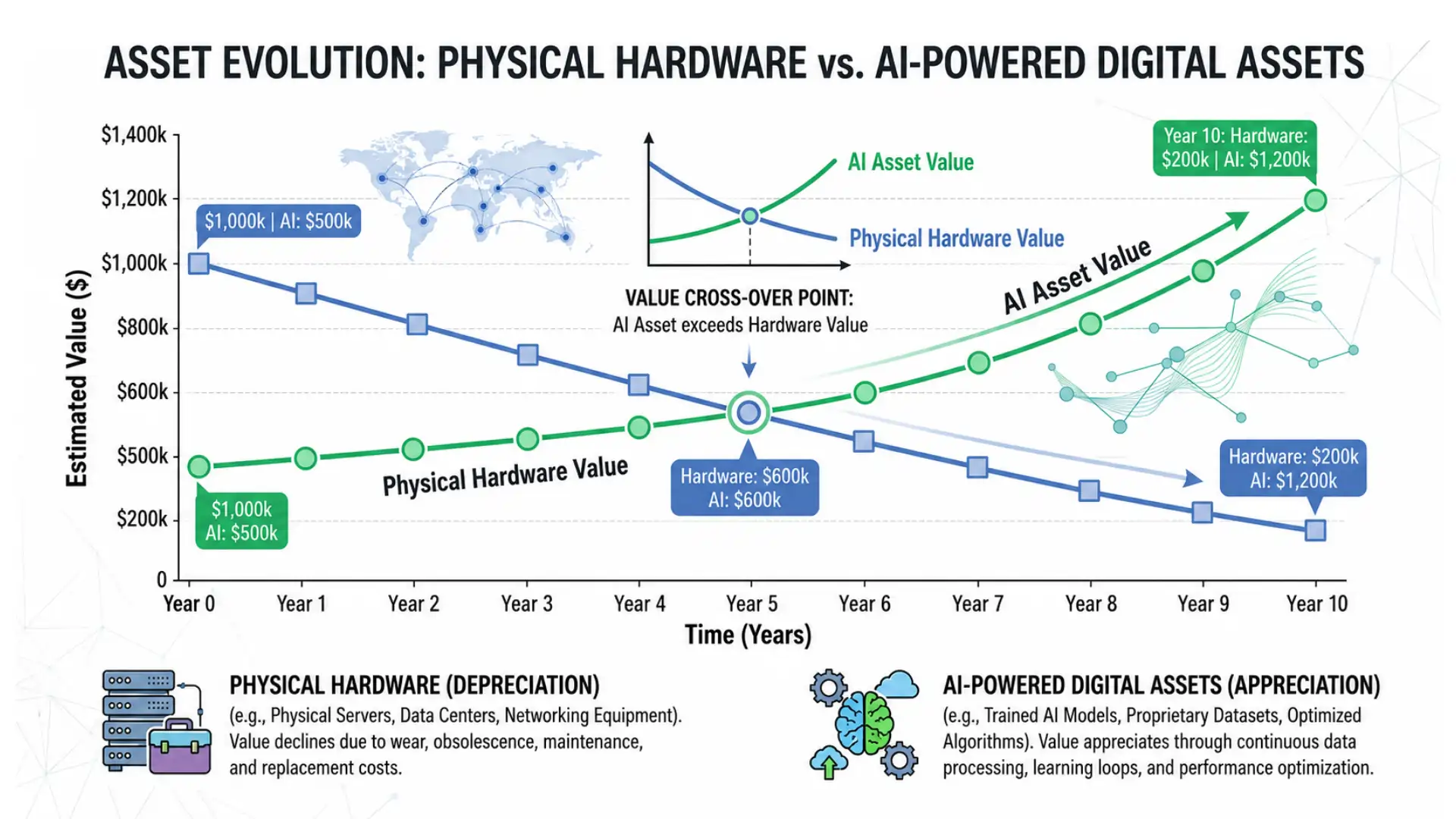
Traditional business assets lose value over time. Machinery wears down and depreciates. AI introduces a radical new economic reality. AI-driven digital assets actually gain worth the more you use them.
Every time an AI system processes new data, it becomes smarter. It becomes more accurate and reliable. Consider self-driving vehicles. Every mile driven by a user feeds data back into the cloud. This constant learning cycle makes the entire fleet safer. It makes the product more valuable over time, even after it is purchased.
Moving Beyond Rigid Rules
Many companies still run on strict rules. These unchanging "if-then" policies struggle to handle sudden market shifts. AI offers a highly dynamic alternative. Companies can transition to autonomous policies. These new rules are powered by advanced machine learning.
These intelligent systems constantly absorb new environmental data. They adjust operations automatically to optimize outcomes. They require minimal human intervention to function. This makes the business highly resilient. It makes the organization incredibly adaptable to global changes.
Conclusion
The AI transformation journey is no longer optional. It is a critical requirement for future business survival. Companies must clearly understand the difference between basic digitalization and true business transformation. They need to perfectly align their technology, business goals, and human talent. By progressing through strategic phases, organizations can build self-learning models. They can create unique digital assets that grow in value continuously. Ultimately, embracing this journey allows businesses to innovate rapidly. It helps them outpace competitors. It empowers them to redefine the future of their industries.