By Rabih Al Itani, Assistant IT Director - Ogero Telecom, Lebanon

Walk into any telecom conference today and AI dominates the agenda before the first coffee break ends. Boards want AI strategies. Vendors promise the right platform will fix problems that outlasted three earlier transformation programs. Operators are moving on it: predictive maintenance pilots, automated fault correlation, AI-assisted customer care, and smarter cybersecurity monitoring. None of this enthusiasm is misplaced. Telecom runs on scale; millions of network elements, constant data flow, and customers who notice a dropped call faster than almost anything else a company gets wrong. AI is genuinely useful against that kind of complexity.
And yet a large share of these initiatives quietly stall somewhere between the pilot and the rollout. I have spent years on the operational and leadership side of telecom transformation, and I keep arriving at the same explanation. The technology is rarely what gets in the way. The organization does. What slows people down is not the AI itself. It is the uncertainty around it, the sense of losing control over a process they used to own, and a change nobody took the time to explain properly.
When the Network Moves Faster Than the People Running It
Telecom operations do not leave much room to breathe. A Network Operations Center can field thousands of alarms in a single shift. Fiber networks keep extending into new territory. Threat actors do not wait for a budget cycle. When something goes wrong, the outage is rarely quiet. It shows up as angry calls, social posts, and a service-level report someone has to explain to leadership by morning.
AI fits naturally into that pressure. A well-trained model can flag a degrading transceiver weeks before it fails outright. Correlation engines can take a flood of alarms and reduce them to the one root cause worth chasing. Dashboards can replace a stack of spreadsheets with something a director can read in real time.
But technical capability tends to arrive faster than organizational readiness. I have seen platforms that performed exactly as the vendor promised in testing, only to sit underused six months after go-live. Engineers kept double-checking the system against their own manual process. Team leads avoided acting on a recommendation they could not explain upward. Nothing was technically broken. The people simply were not ready to lean on it yet. That gap is rarely about the algorithm. It is about trust, and trust has to be earned, not installed.
Trust Decides Adoption
I have watched this play out in more than one NOC. A single fiber cut can ripple into a dozen separate alarms across different systems. An engineer spends the first twenty minutes just working out which alarm is the real cause. Event correlation exists to remove that twenty minutes, and it usually works.
But here is the real test: when engineers can follow the logic behind a recommendation, even loosely, they act on it. When the system feels like a black box, they revert to manual checks. Not because the tool is wrong, but because being wrong on their watch, for a reason they cannot explain, is a risk they will not take.
Problem-First Beginnings
The most common mistake I see is treating AI as a procurement exercise. Find the platform, sign the contract, declare success. That order puts the technology before the problem, and it shows up later in how hard the team has to work to justify the spend. A better starting point is naming the actual pain first.
Once those questions have real answers, AI stops being an abstract initiative. It becomes a tool aimed at something specific. Every transformation I have seen hold up started from a business problem, not a piece of software looking for a use case.
People Decide the Outcome, Not the Platform
Even the best AI deployment still ends with a person making a call. A predictive model can flag a likely equipment failure, but an engineer decides whether to schedule the truck roll. An automated triage system can sort tickets, but a technician still resolves them. A forecasting dashboard can highlight a capacity risk, but a planning team still commits the budget. AI changes what information reaches people and how fast. It does not remove people from the decision.
That is why preparing the workforce matters as much as preparing the infrastructure. People need to understand, in terms that fit their own job, what the system is doing and why. They need a real chance to question it before they are expected to rely on it. And they need to see, through how the rollout is actually handled and not just a memo, that the tool is there to support their work, not replace it quietly.
Trust like that does not come from the deployment itself. It builds slowly, through people being kept in the loop and shown results that hold up once the novelty wears off.
Governance and Leadership Move Together
Governance often gets treated as something to formalize once the technology is already proving itself. Every time I have watched an organization take that approach, the bill came due the moment they tried to scale past a pilot. Suddenly nobody could say who owned a model's output or how it was being monitored.
Telecom operators hold an unusual amount of sensitive data; customer records, network telemetry, infrastructure maps. The systems that make recommendations on top of that data shape service quality and customer outcomes directly. That calls for real structure, which includes clear accountability, human checkpoints on higher-stakes decisions, and ongoing monitoring once a system is live.
Leaders often assume structure like this slows innovation down. What I have actually seen runs the other way. Organizations that put guardrails in place early move faster later, because everyone already understands where the boundaries sit. When done right, governance is not a brake. It is what lets people move without second-guessing themselves.
None of it works without leadership setting the tone. People watch how leaders talk about change more closely than they read the official announcement. Frame AI mainly as a way to cut headcount, and resistance shows up fast. Frame it as something that improves the work and frees people for the parts of the job that actually need a human, and the same rollout meets far less friction.
Executives do not need to understand the mathematics behind a model. They need enough fluency to ask the right questions, and the discipline to keep paying attention well after the launch announcement.
Conclusion
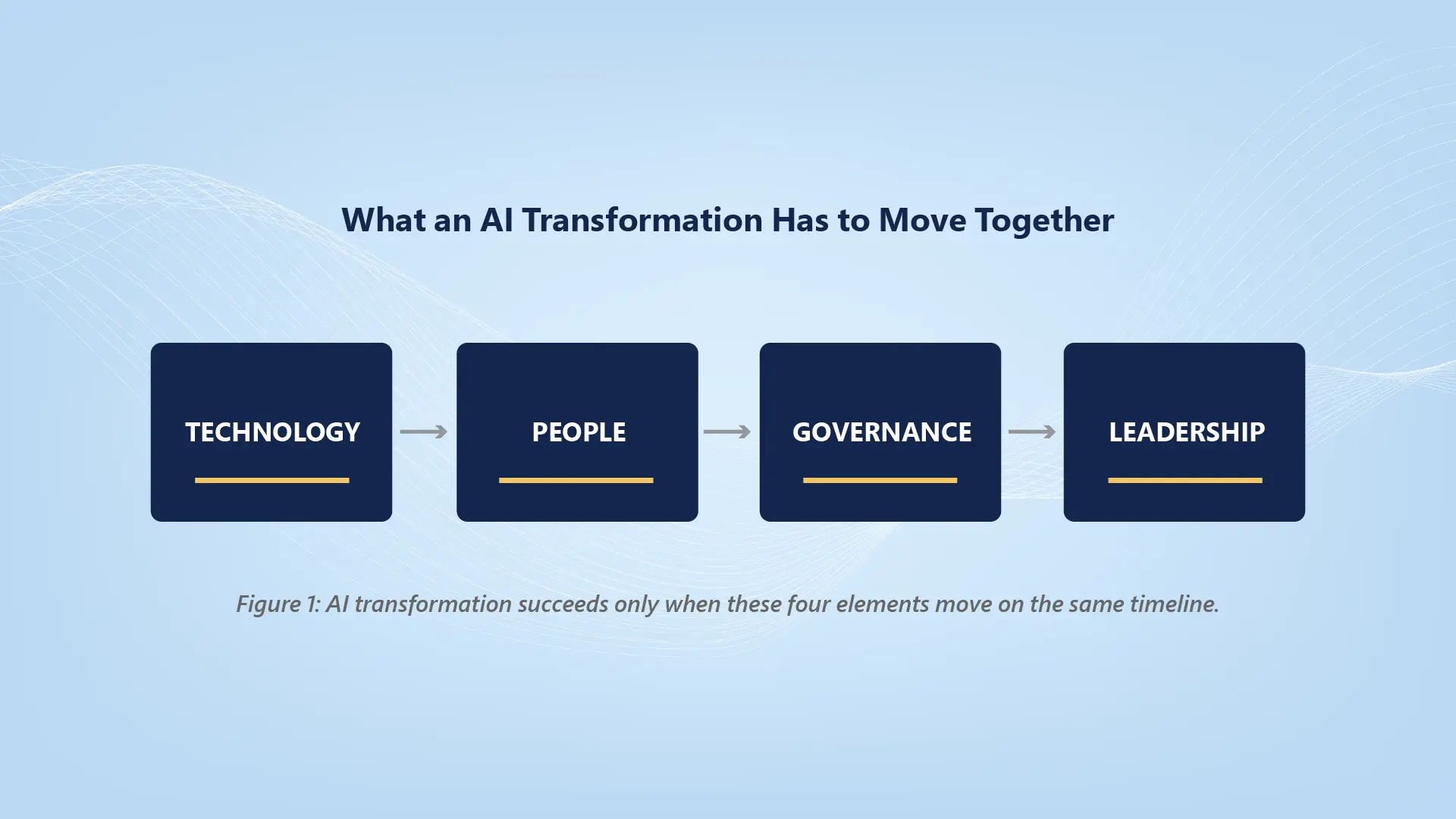
AI's role in telecom will only deepen. Networks will keep getting smarter. Service management will keep getting more predictive. But the operators who get the most out of this shift will not be the ones with the biggest AI budget or the flashiest model. They will be the ones who move technology, people, governance, and leadership forward together, instead of letting one race ahead while the rest catch up later.
Telecom is at a genuine turning point. AI can sharpen operational efficiency, improve the customer experience, and support better decisions across nearly every part of the business. None of that happens automatically just because the technology is capable. It happens because leadership made room for it, because the workforce was prepared rather than surprised by it, and because trust was built deliberately rather than assumed.
The operators that come out ahead will not be the ones who deployed AI first. They will be the ones who got their people ready for it. A platform can start a transformation. Only a prepared workforce can finish one. The algorithm was never the hard part.